BSc Business Administration
Distinction
RELEVANT MODULES
- Operations Research I & II
- Mathematics in Management I & II
- Statistics I & II
- Systems Analysis & Design
Integrating network optimisation and LLM-based agents
A foundation in business, quantitative methods and analytics.
Distinction
Distinction · Course Director’s Prize
Dissertation: football analytics with explainable ML and LLMs
Developed an end-to-end healthcare platform integrating business intelligence, explainable predictive models, and an agentic AI copilot to support clinical and operational decisions.
Built an encrypted credential manager enabling AI agents to securely generate, store, retrieve, and autofill passwords through permission-controlled MCP access.
Developed a reproducible football analytics pipeline combining machine learning, explainable AI, and LLM-generated insights to support tactical decision-making.
Developed an online repair-booking platform with a conversational AI agent designed to classify customer issues, manage bookings, and track repair status through messaging channels.
Engineered a native macOS Markdown editor in SwiftUI, integrating a multi-model AI agent for document analysis, editing, and human-reviewed changes.
Additional projects spanning operations research, optimisation, simulation, NLP, automation, and full-stack software development.
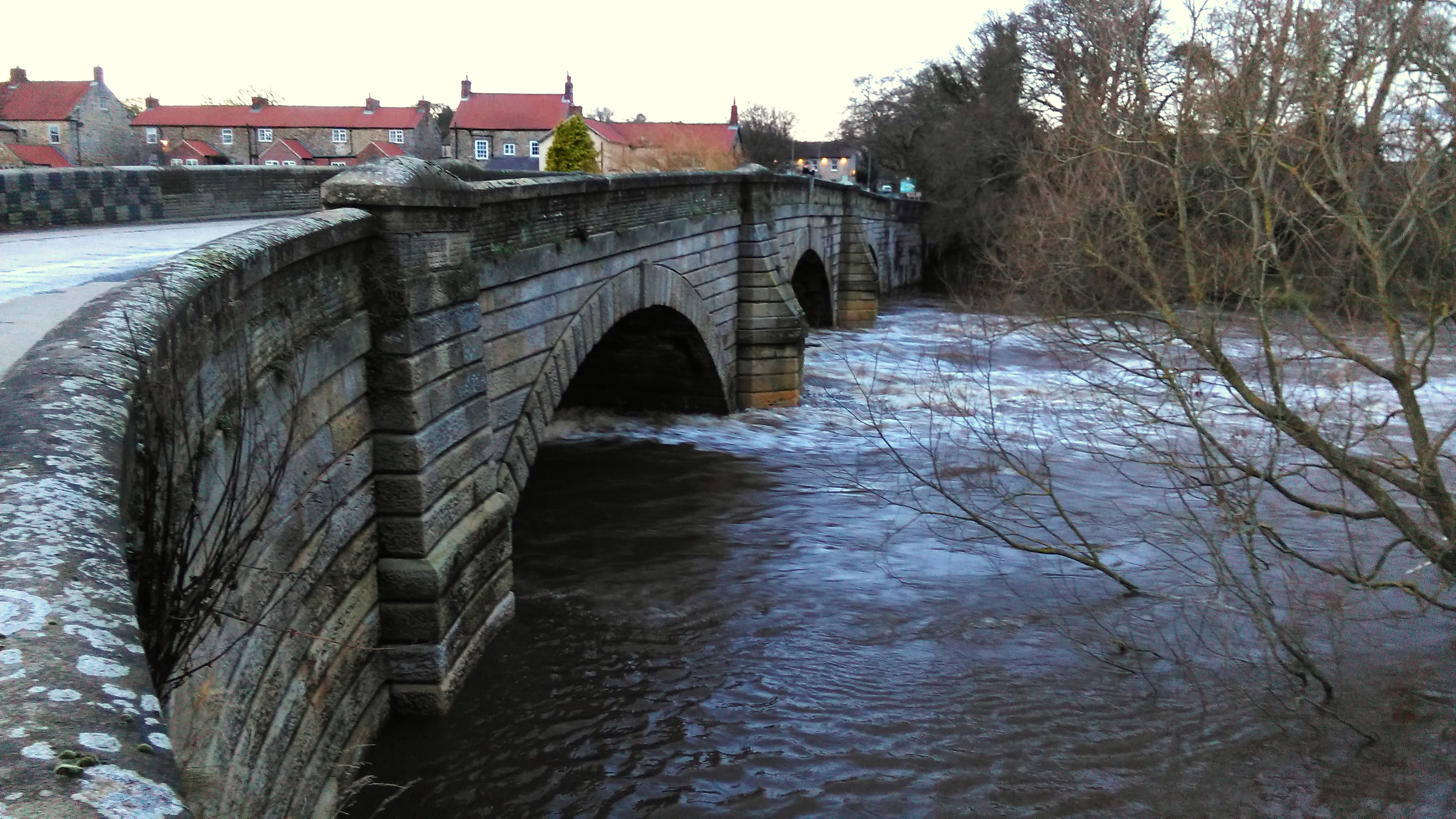
Flooding threatens communities, transport infrastructure, and the time available to respond.
Properties in areas at risk of flooding in England.
Share of England’s road network by length in areas at risk.
From warning to warning level, by area, during Storm Desmond (2015).
Once evacuation begins, authorities must reassess the plan as conditions evolve.
Flooding or incidents can close routes that the original plan relied on.
Congestion can build at junctions and spread to other parts of the network.
Behaviour is unpredictable: people may depart from the evacuation routes recommended to them.
Operations Research has helped authorities develop effective evacuation strategies through
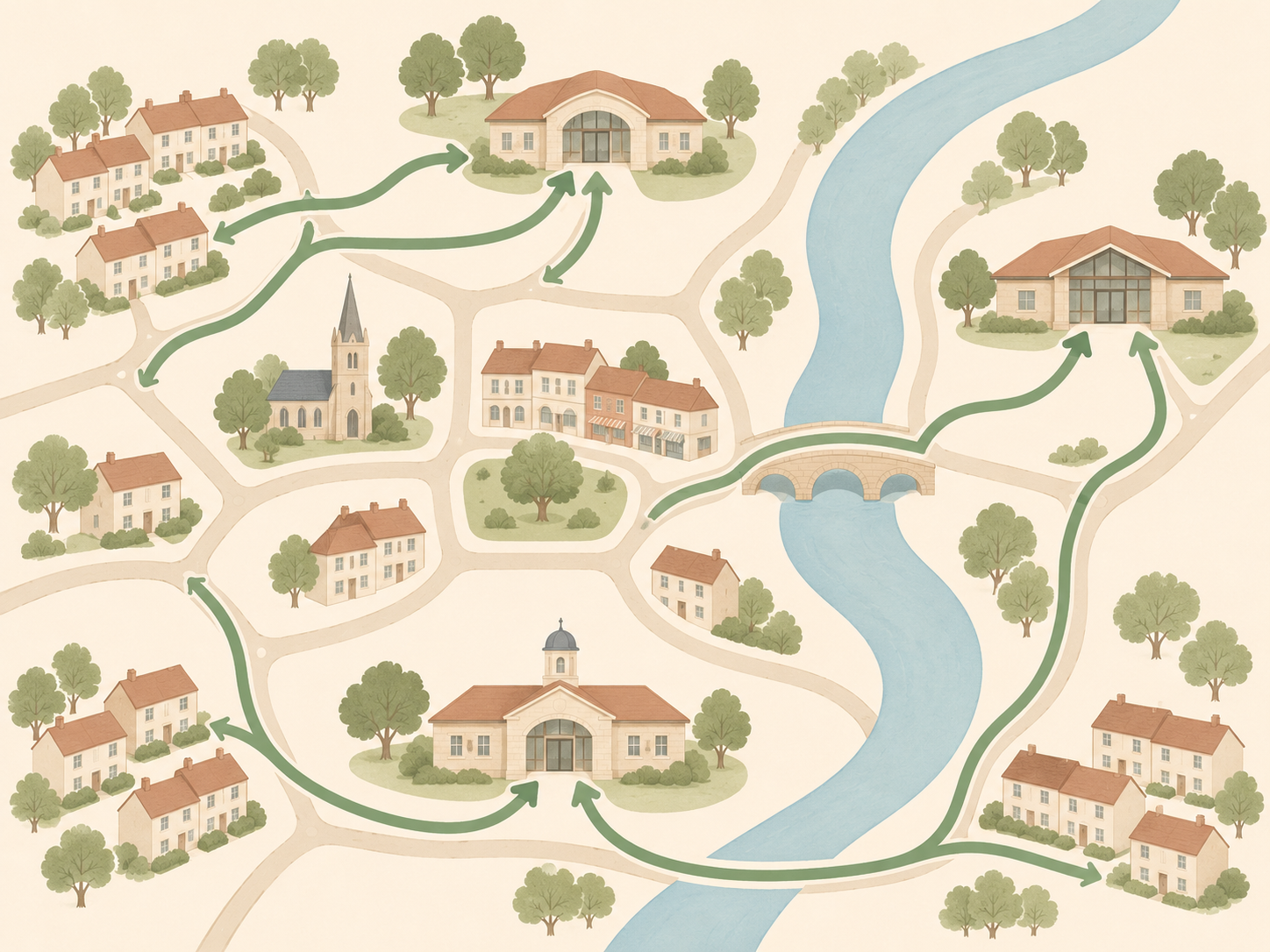
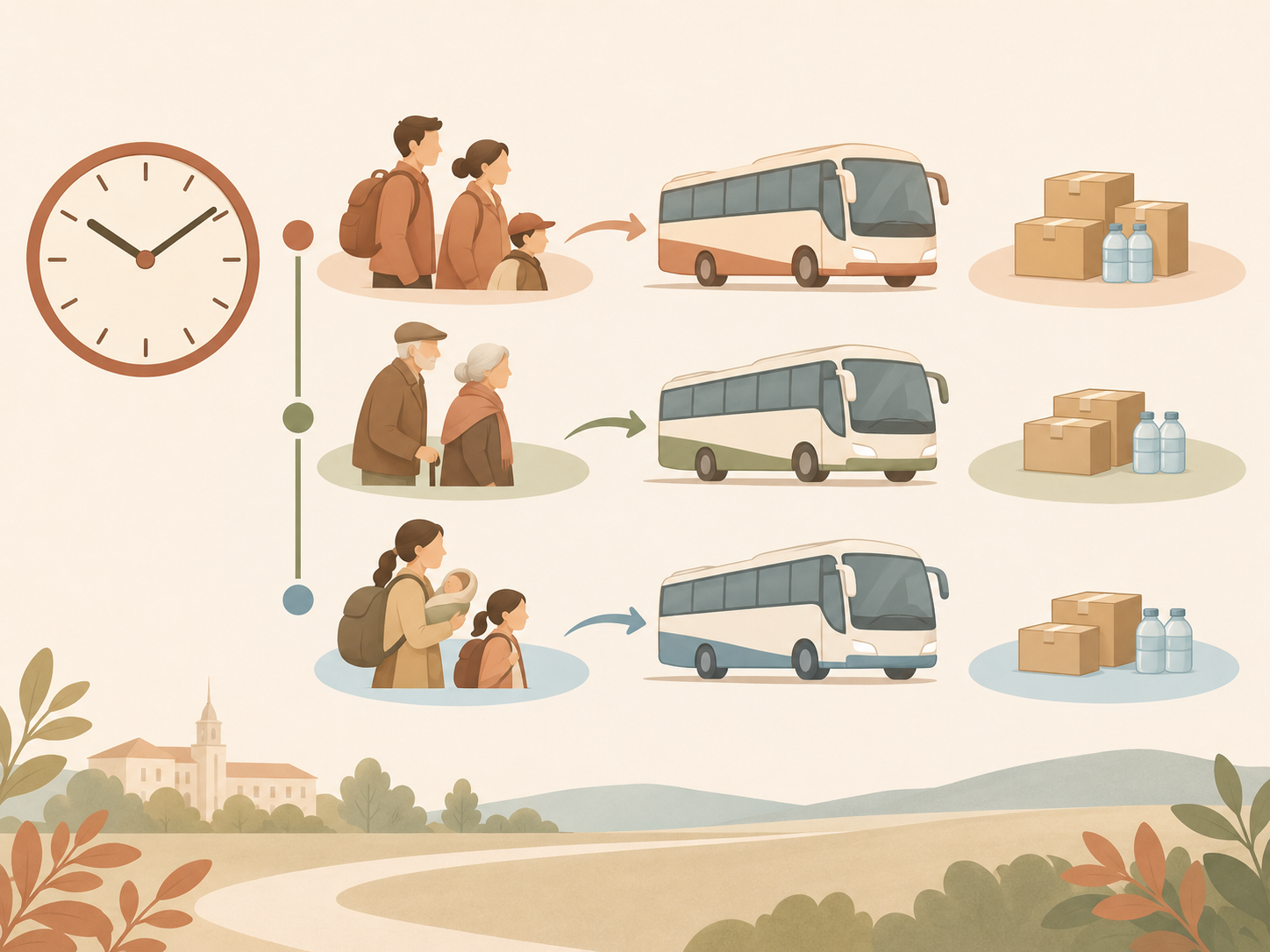
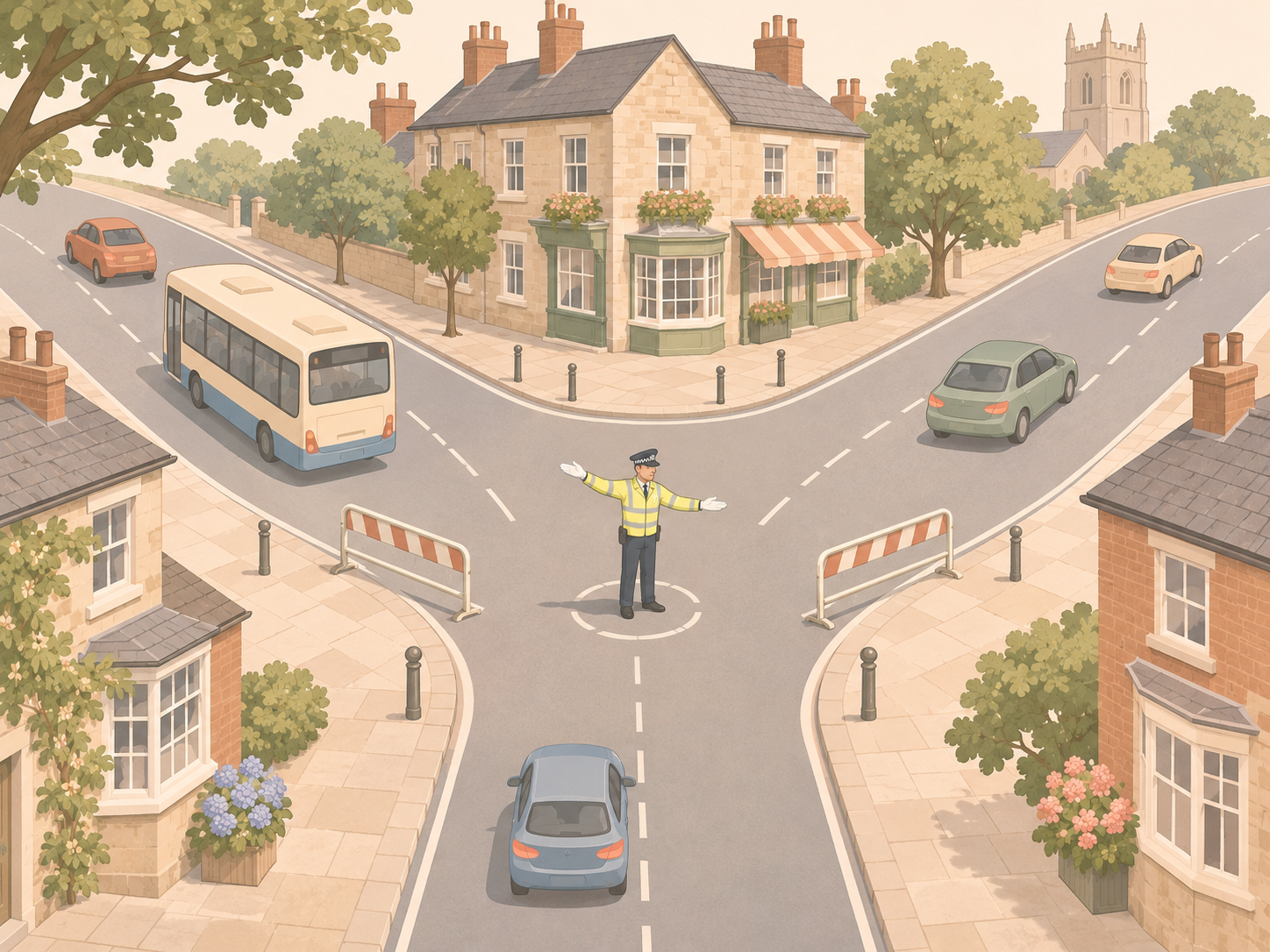
Network optimisation models can revise evacuation routes and traffic flows in response to road disruptions, including multiple incidents.
Evacuation models have incorporated route-choice behaviour and compliance with official instructions, although simplified assumptions remain common.
Researchers have combined simulation and optimisation to evaluate and iteratively improve evacuation strategies.
How can these capabilities be integrated to support timely, network-wide decisions under evolving flood and traffic conditions?
How can we anticipate bottlenecks, account for road capacity and queues, and make better use of the available network?
How can complex optimisation problems be solved or updated quickly enough to support decisions during an unfolding emergency?
How can changing flood and traffic information be used to investigate interventions, assess their consequences, and support human decisions?
A proposed framework for studying evacuation decision support in a simulated environment, with human review.
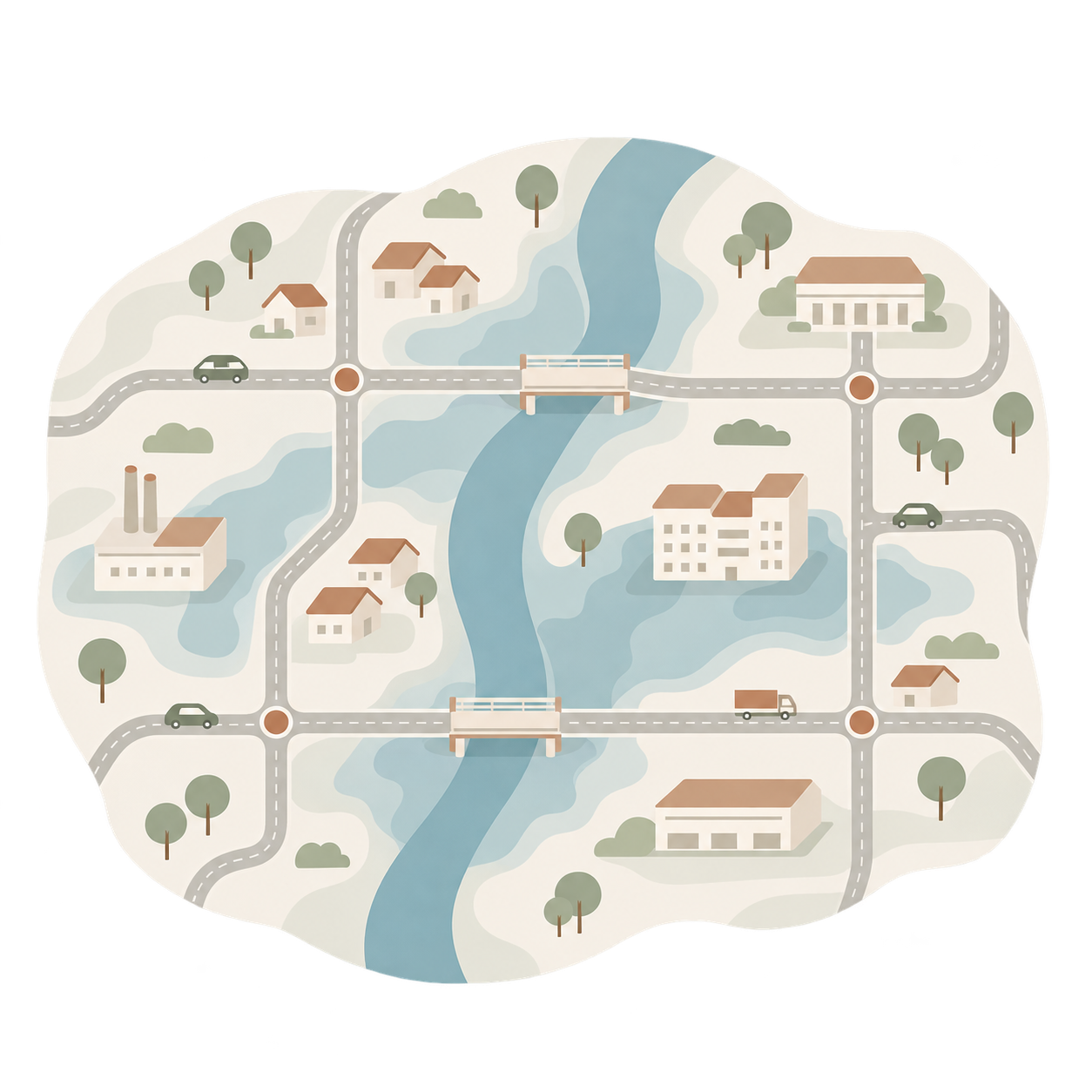
A controlled environment for simulating evolving floods, traffic, and driver behaviour, where alternative interventions can be tested.
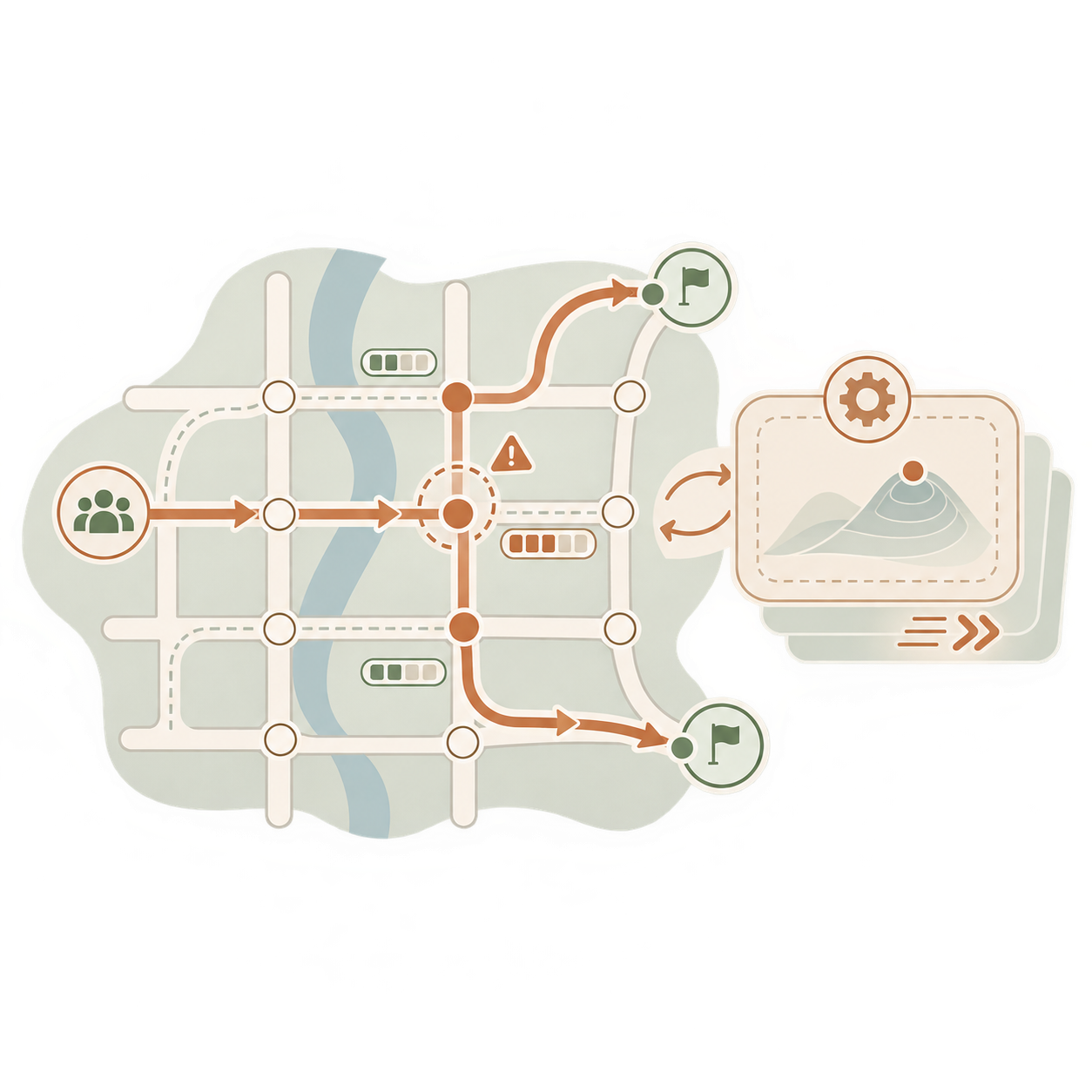
A queue-aware tool the AI agent can use to evaluate interventions and re-optimise network-level decisions as conditions change.

Investigates emerging problems, uses optimisation and simulation tools to test alternatives, and prepares strategic recommendations for human approval.
To investigate whether an LLM-based agent can use simulation and fast network optimisation to support timely, evidence-based evacuation decisions under human supervision.
Each chapter builds the foundations needed for the next.
Build a reproducible environment and critically review fast re-optimisation methods.
Develop and evaluate a model accounting for queues, road capacity and changing conditions.
Evaluate an LLM-based agent using tools to support human-supervised decisions.
A controlled simulation environment for changing road conditions and driver behaviour.
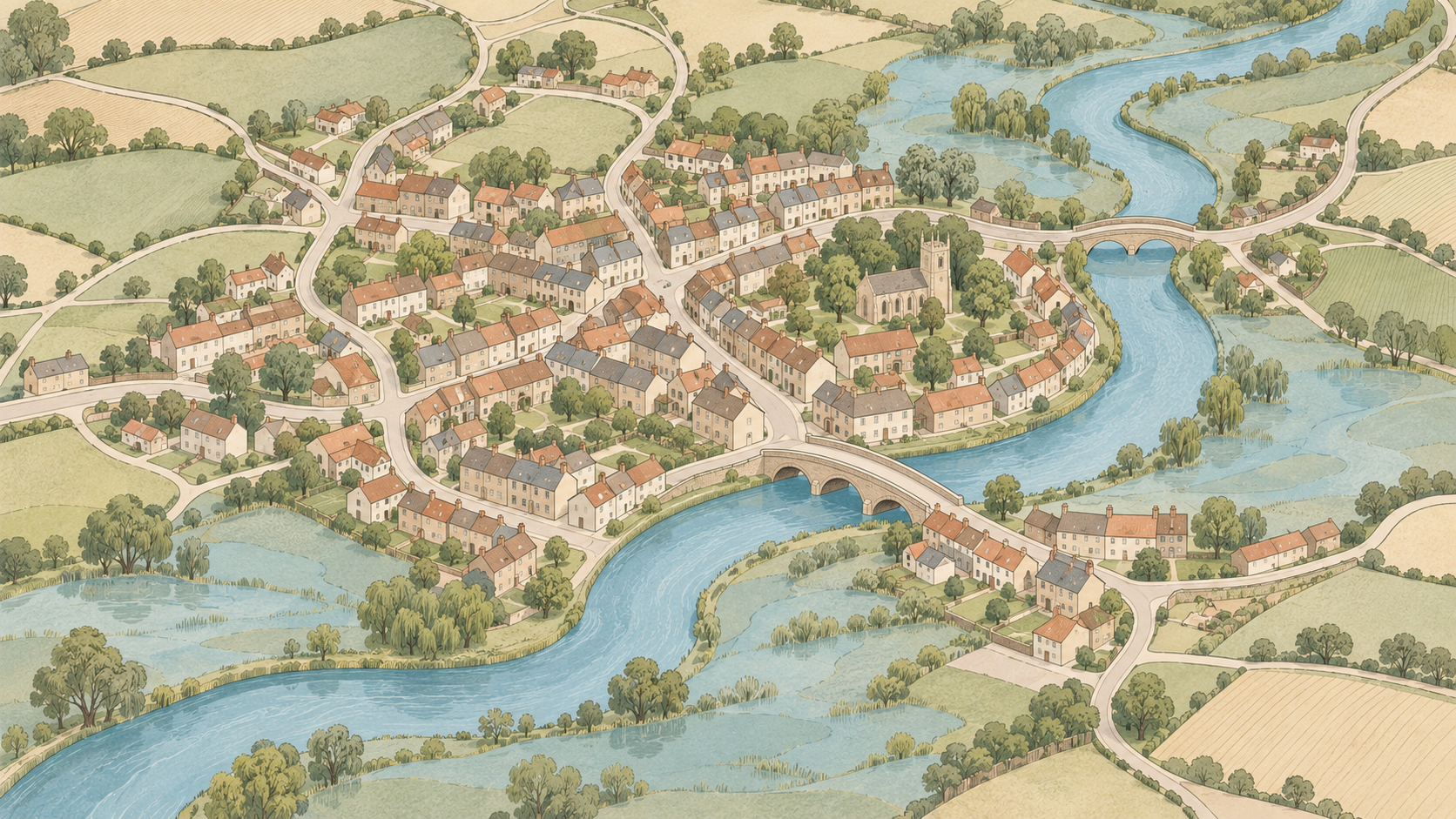 ILLUSTRATIVE CASE-STUDY ENVIRONMENT
Assess existing approaches for rapid network re-optimisation.
ILLUSTRATIVE CASE-STUDY ENVIRONMENTHow can we update evacuation decisions quickly as network conditions change?
Build a CTM-based model representing traffic flows, road capacity and queue formation.
Build on Chapter 1’s methods review and investigate practical approaches, including affected-area computation.
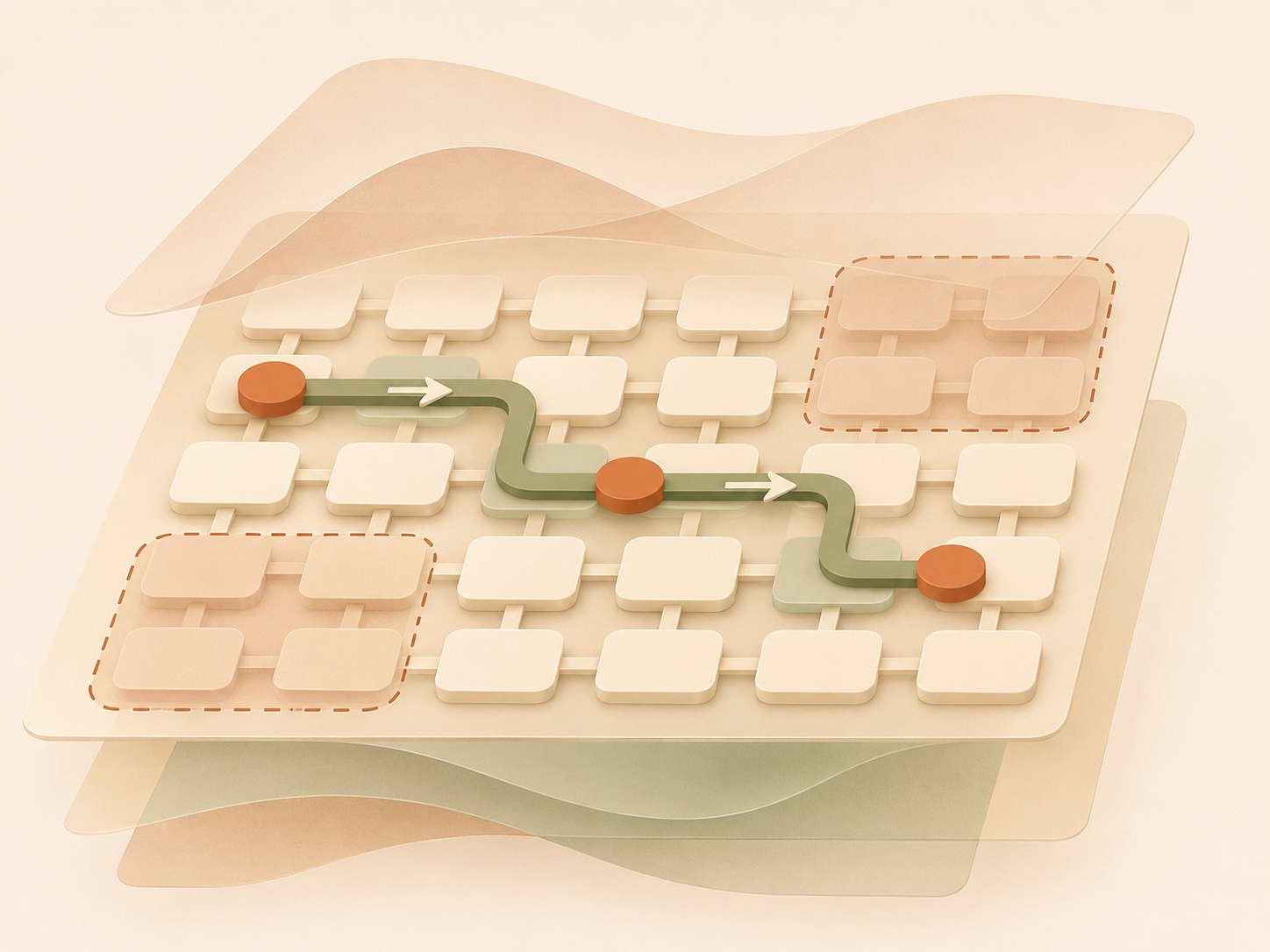

Can an LLM-based agent investigate emerging problems, test interventions and provide reliable recommendations in time for human review?
How can flood forecasts, dynamic network optimisation and LLM-based agents be integrated to support timely, reliable and human-supervised evacuation decisions as road and traffic conditions change?
How can a reproducible flood evacuation testbed be developed to represent changing road conditions and unpredictable traffic behaviour, and which existing optimisation and acceleration methods offer the most promising foundations for rapid network re-optimisation?
How can a queue-aware network optimisation model be developed and efficiently re-optimised as flood risks, road availability and traffic conditions change, particularly by focusing computation on affected parts of the network?
Can an LLM-based agent, operating with incomplete information and controlled access to optimisation and simulation tools, autonomously investigate emerging network problems, test alternative interventions and provide reliable, timely strategic recommendations for human approval?
Potential applications, research contributions and future extensions.
Evaluate strategies when roads flood, close or become congested. Adaptation requires local validation.
Investigate how flood development, traffic behaviour and operational decisions interact.
Three planned journal papers and open simulation tools, code and evaluation methods, where licensing permits.
Explore adapting the hazard model to other disasters, subject to validation of dynamics and assumptions.
Explore an MCP interface for other AI agents to access the solver’s computational capabilities.
Findings will be shared through academic conferences, three planned journal papers, and a policy brief for emergency planners.
Three interconnected chapters, each contributing one planned journal paper.
Review fast methods, heuristics and hardware acceleration. Build the Cockermouth testbed.
Complete the testbed. Assess solution methods and identify approaches for Chapter 2.
Develop the queue-aware CTM model. Implement selected rapid re-optimisation methods.
Test time, quality and scalability. Investigate local updates and CPU/GPU approaches.
Develop the agent and harness. Connect information, optimisation and SUMO.
Test feasibility, reliability and response time. Complete final paper and dissertation.
I look forward to discussing the research with you.
Thank you for meeting with me. I’m Soroush Samani.
Today, I’ll present my research proposal. It is about using optimisation and AI to support flood evacuation decisions.
My background combines business decisions with quantitative methods.
My bachelor’s degree gave me a foundation in operations research, statistics and systems analysis.
My master’s added optimisation, simulation, machine learning and data analytics. Together, they prepared me for decision-support research.
Many of my projects help people make decisions.
Some use data and explainable models, like the diabetes platform. Others use AI agents with controlled access, like MCPVault and TamirEvi.
I have also worked on simulation, analytics and tools where people review AI suggestions. These experiences led me to this research idea.
Flooding is a significant risk in England. About 6.3 million properties are in areas at risk of flooding. Around 38 percent of the road network, by length, is also in areas at risk.
Cockermouth experienced severe flooding during Storm Desmond in December 2015. The investigation report recorded about 34 minutes to five hours between the flood warning and the warning level, depending on the area.
This shows the scale of flood risk and how little time communities may have to respond.
Imagine a flood evacuation has already started.
First, a road or bridge may close because of flooding.
Second, traffic may move to other roads. This can cause queues, especially at junctions.
Third, people do not always follow the recommended routes. Their choices can put too much pressure on some roads, while other roads still have space.
As conditions change, the original plan may become less effective. So, decision-makers need to review the plan as the evacuation continues.
Evacuation planning is not a new research area. Over the years, researchers have developed sophisticated optimisation models to identify suitable evacuation routes, allocate people to shelters, decide when evacuations should take place, and manage limited resources.
These are important contributions, and they give us a strong foundation for evacuation planning.
However, designing a good plan in advance is only one part of the challenge.
Research has already made important progress beyond planning evacuations in advance.
For example, Lim and colleagues developed a network optimisation approach for rerouting evacuees after road disruptions. Darvishan and Lim later extended this to multiple incidents occurring at different times, while also addressing computational efficiency.
Researchers have also studied human behaviour, including how people choose routes and whether they follow evacuation instructions.
And simulation–optimisation methods have been developed to test and improve evacuation strategies.
A recent comprehensive review by Moslemi and colleagues, including Professor Bayram, shows both the progress made and the limitations that remain, particularly in behavioural realism and dynamic decision-making.
So the question is not whether these methods exist. It is how we can bring them together to support timely decisions across a changing road network.
This leads to three challenges that my research aims to investigate.
This brings us to the broader research challenge.
First, we need to look beyond individual routes. A route may appear suitable, but directing more vehicles onto it can create another bottleneck. We need to consider the capacity and traffic conditions of the whole network, including problems that may develop soon.
Second, solving these optimisation problems takes computational effort. During an emergency, we cannot wait indefinitely for an optimal answer. We need to investigate methods that can provide sufficiently good solutions within operational time limits.
Finally, even a good optimisation result does not automatically become an operational decision. Authorities need to consider possible interventions, understand their likely consequences, and decide what action to take.
These are the challenges that motivate my proposed research.
The main idea is to investigate an AI agent that can support evacuation decisions as conditions change.
To study this, I need three connected components.
First, a simulated testbed that represents the evolving flood and traffic situation. This provides a controlled environment where we can observe problems and test possible interventions.
Second, a network optimisation model that acts as a computational tool for the agent. It should help evaluate decisions while accounting for road capacity, congestion, and changing conditions. Making this process fast enough is one of the research challenges.
Third, the LLM-based agent itself. It can investigate emerging problems, use the optimisation model and simulation sandbox to compare interventions, and present evidence-based strategic recommendations.
Importantly, the final decision remains with the human operator.
The aim is to evaluate whether this approach is feasible, timely, and reliable—not to assume that it will work.
So, the next question is how we can actually build and evaluate a system like this.
I have structured the research into three interconnected chapters. The first develops the experimental foundations and reviews suitable optimisation methods. The second develops and evaluates the network optimisation model. And the third brings these components together through an LLM-based agent.
The first part of Chapter 1 is to develop a reproducible testbed using Cockermouth as the case study. I plan to combine an OpenStreetMap road network, SUMO traffic simulation, and pre-computed flood scenarios based on an existing hydraulic model.
Driver behaviour and incidents will be represented through explicit assumptions, allowing different approaches to be tested under comparable conditions.
Alongside developing the testbed, I will critically review methods for rapid network re-optimisation. This includes heuristics, approaches that focus computation on affected parts of the network, and potentially suitable hardware acceleration techniques.
I will compare their reported computation times, solution quality, and applicability to this problem. The output will be a review paper identifying promising directions for Chapter 2.
In Chapter 2, I will develop the computational model that the AI agent can later use as a tool.
The first step is to build a queue-aware network optimisation model based on the Cell Transmission Model.
This allows us to represent traffic flows, road capacity, and the formation of queues.
The goal is to develop a computational model that can support updated evacuation decisions as network conditions change.
The second part of this chapter focuses on computational efficiency.
Building on the methods reviewed in Chapter 1, I will investigate different approaches to solving and updating the optimisation problem.
One possibility is to focus computation on affected parts of the network rather than repeatedly solving the entire problem.
I will compare approaches in terms of solution time and solution quality.
Depending on the findings, the resulting methods could form a small computational toolkit for the AI agent in Chapter 3.
The planned output is a computational research paper.
Chapter 3 brings the previous two chapters together through an LLM-based decision-support agent.
The agent will operate inside the simulated testbed, using available flood forecasts, traffic conditions and field reports.
When a problem is detected, or an operator reports an incident, the agent investigates the situation and identifies the affected areas.
Importantly, it does not know the true future flood conditions hidden inside the simulation.
The agent does not calculate the optimal network decisions itself.
Instead, it has controlled access to the optimisation tools developed in Chapter 2 and a SUMO simulation sandbox.
It can generate alternative intervention scenarios, use the optimisation model to investigate them, and test possible outcomes through simulation.
The aim is to explore whether these tools can be coordinated to produce useful evidence for decision-making.
The resulting options are presented to a human operator, together with their estimated outcomes.
The operator reviews the evidence and can approve or reject a recommendation, or request further analysis.
This creates a human-in-the-loop process rather than an autonomous evacuation controller.
Finally, I will evaluate the feasibility, reliability and response time of the integrated approach under simulated evacuation conditions.
The planned output is a systems or application research paper.
How can flood forecasts, dynamic network optimisation and LLM-based agents be integrated to support timely, reliable and human-supervised evacuation decisions as road and traffic conditions change?
How can a reproducible flood evacuation testbed be developed to represent changing road conditions and unpredictable traffic behaviour, and which existing optimisation and acceleration methods offer the most promising foundations for rapid network re-optimisation?
How can a queue-aware network optimisation model be developed and efficiently re-optimised as flood risks, road availability and traffic conditions change, particularly by focusing computation on affected parts of the network?
Can an LLM-based agent, operating with incomplete information and controlled access to optimisation and simulation tools, autonomously investigate emerging network problems, test alternative interventions and provide reliable, timely strategic recommendations for human approval?
The research could help emergency authorities examine evacuation strategies when roads flood or become congested. Use in another region would need local validation.
Environmental agencies and transport planners could use the testbed to study how floods, traffic and decisions interact. Researchers could use the tools, code and evaluation methods, where licensing allows.
There are also possible future extensions. The framework might be adapted to other hazards, after validation. An MCP interface could let other agents access the optimisation tool.
I plan to share the findings through conferences, three journal papers and a policy brief.
The project is planned over three years, in six phases.
In year one, I will build the testbed and review fast optimisation methods. This leads to the first planned paper.
In year two, I will develop the optimisation model and test its speed, quality and scalability. This leads to the computational paper.
In year three, I will integrate the agent and evaluate the full approach. I will then complete the final paper and dissertation.
Each chapter builds on the previous one.
Review fast optimisation methods, heuristics and hardware acceleration techniques. Develop the Cockermouth testbed using OpenStreetMap, SUMO and pre-computed flood scenarios.
Planned milestone — Initial testbed + structured review.
Complete the testbed, critically assess existing solution methods and identify promising approaches for Chapter 2.
Planned milestone — Paper 1 · planned review submission.
Develop the queue-aware, CTM-based optimisation model. Implement selected methods for rapid re-optimisation.
Planned milestone — Working optimisation model.
Evaluate solution time, quality and scalability. Investigate local re-optimisation and suitable CPU/GPU approaches.
Planned milestone — Paper 2 · planned computational submission.
Develop the LLM-based agent and controlled harness. Integrate flood and traffic information, optimisation tools and a SUMO sandbox.
Planned milestone — Integrated decision-support prototype.
Evaluate feasibility, reliability and response time under simulated evacuation conditions. Complete the final paper and dissertation.
Planned milestone — Paper 3 + dissertation · planned submission.
Thank you very much for your time. I would be happy to discuss the research or answer any questions.